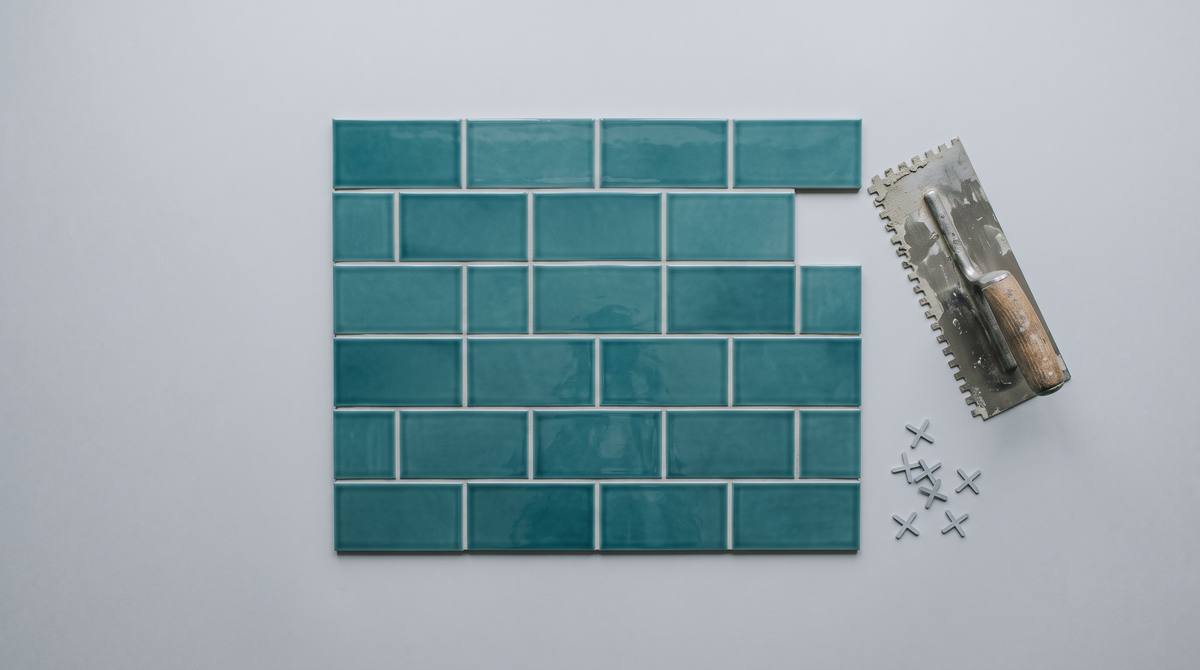
Planning a tile project
A tile job is three purchases, not one: the tile itself, the thinset mortar that holds it down and the grout that fills the joints. Each is sold in a different package and each depends on different measurements. Tile depends on area and layout, thinset on area and trowel notch, and grout on tile size and joint width as much as on area.
The calculators in this aisle follow that split. The floor and wall tile calculators give you boxes of tile with a cut allowance, plus a first estimate of thinset and grout. The grout and thinset calculators let you look at those two materials on their own, for example when you change the joint width or the trowel.
Measure the area you will actually tile
For a floor, measure the length and width of the room at the floor, wall to wall. Measure closets, alcoves and the space under a vanity that will be tiled separately and add them. Leave out areas under cabinets or a bathtub that will not get tile.
For walls, measure the length of each run and the height you plan to tile. A kitchen backsplash usually runs from the countertop to the bottom of the wall cabinets, about 18 inches. Showers are measured wall by wall to the height of the tile, which is often the ceiling. Subtract windows and other large openings; outlets and switches are not worth subtracting because you tile around them.
Write the measurements down as you go. Mixing feet and inches is the most common reason an estimate comes out wrong.
Cut waste depends on the layout
Every row ends in a cut, and the offcut is often too small to use elsewhere. That is why tile is always bought with an allowance on top of the measured area. The pattern matters more than the room size: angled patterns cut more tiles, and each cut leaves a larger wasted triangle.
Small rooms, many corners, a lot of pipes and large tiles all push waste up. Handmade or highly varied tile can need a little more so you can set aside pieces you do not like.
- Straight or offset (brick) layout: about 10%
- Diagonal layout: about 15%
- Herringbone: up to 20%
Buy whole boxes from one lot
Tile is sold by the box, and the number of tiles per box changes with size, thickness and brand. The label states how many square feet or square meters each box covers. The calculators ask for that number because it is the only reliable way to turn tiles into boxes.
Each box also carries a lot or batch number, often with a shade and caliber code. Tile from different lots can differ in color and even in size by a millimeter or two, which shows on the floor. Buy the whole job at once, check that the lot numbers match and keep a few spare tiles after the job for future repairs.
Thinset: the trowel decides the amount
Thinset is spread with a notched trowel, and the notch size sets how much mortar goes under each tile. A larger tile needs a larger notch so the ridges collapse into full contact with its back. A common rule: a ¼″ × ¼″ square notch for tile up to 8″, ¼″ × ⅜″ for tile up to about 15″ and ½″ × ½″ for larger tile.
Bag charts give coverage per notch. The calculators use the conservative end of typical charts: about 90, 60 and 40 square feet per 50 lb bag for those three notches. Uneven floors, back-buttering large tile and tile with deep ribs on the back all use more. Lift a tile now and then while you work; if the back is not fully covered, use a bigger notch and plan for more bags.
Grout: small tiles and wide joints use more
Grout fills the space between tiles, so the amount follows the length, width and depth of the joints. Smaller tiles mean more joint per square foot; a mosaic floor can take several times the grout of a large-format floor with the same joint. Wider joints and thicker tile also hold more.
Joints of ⅛″ and wider take sanded grout, which resists shrinking and cracking. Narrower joints, common on wall tile, take unsanded grout. Buy one color from one batch for the whole job, and seal cement grout once it has cured if the bag recommends it.
Common mistakes that cost a second trip
Most shortfalls come from forgetting a closet, skipping the cut allowance, or buying thinset for a small notch and then setting large tile. Most overspending comes from guessing the box coverage instead of reading it. Check the box label, check the bag chart and round up to whole packages.
- Measure every area that gets tile, including closets and niches
- Add the cut allowance for your layout before counting boxes
- Match the trowel notch to the largest tile side
- Choose sanded or unsanded grout by joint width
- Keep spare tiles and a little grout for repairs
Calculators in this aisle
- Floor tile calculator: Room and tile size in, shopping list out: boxes of tile with cut waste, plus the thinset, grout and spacers to set them.
- Wall tile and backsplash calculator: Wall and tile size in, shopping list out: boxes of tile for a backsplash, shower or wall, with the thinset, grout and trim.
- Grout calculator: Area, tile size and joint width in, shopping list out: bags of the right grout type with the tools to spread and clean it.
- Thinset calculator: Area and trowel notch in, shopping list out: bags of thinset mortar with the trowel and mixing paddle.