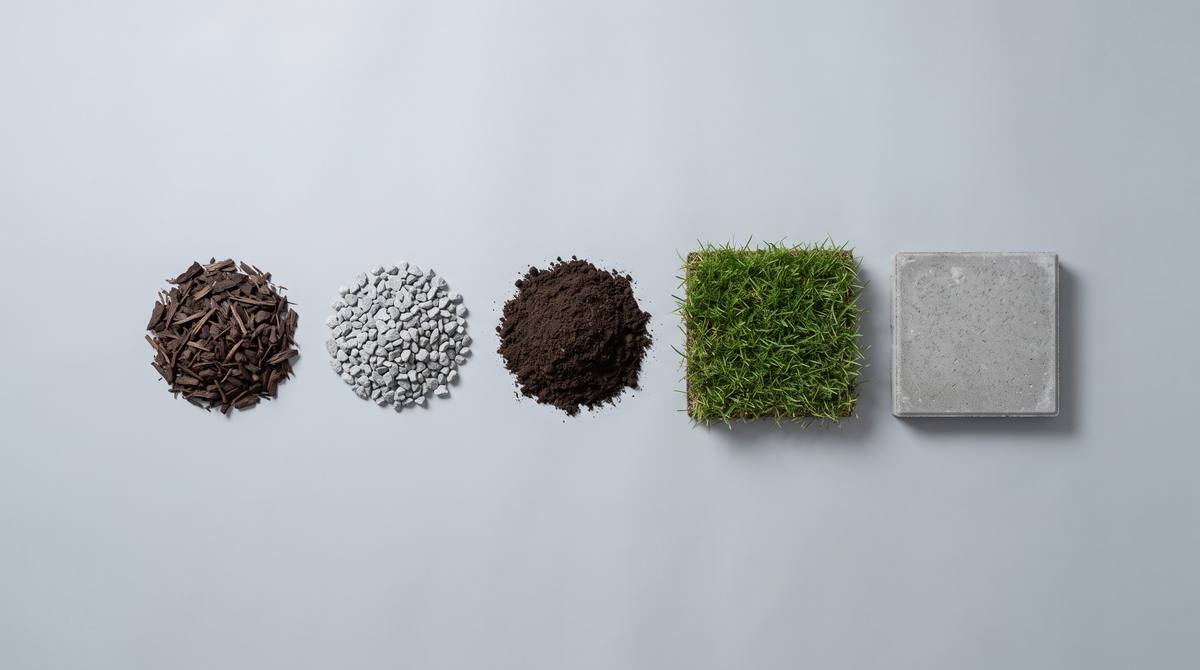
Planning a yard project
Most outdoor materials are bought by volume or by weight, not by the piece. Mulch and topsoil come in bags or by the cubic yard, gravel and paver base by the ton, and sod by the pallet. That makes yard projects easy to over- or under-order: a few inches of extra depth over a large area quickly adds up to another truckload.
Every calculator in this aisle starts the same way: measure the area, decide the depth, and turn that into the unit the yard or garden center actually sells. Each one then adds an allowance for settling, compaction or cutting, and rounds up so you are not short on the last weekend of the job.
Measure area first, then depth
Measure beds, paths and lawns in feet (or metres) and multiply length by width. Irregular shapes are easiest to handle as a few rectangles added together; for a round bed, multiply the radius by itself and by 3.14. Being off by a foot on a long edge matters far less than guessing the depth.
Depth is where most mistakes happen. One inch over 200 square feet is about 17 cubic feet, more than eight bags of mulch. Decide the depth from what the material needs to do, not from how full the bed looks, and use the same number when you order.
- Mulch on beds: 2–3″ (5–7.5 cm)
- Topsoil under new lawn: 4–6″ (10–15 cm)
- Gravel paths: 2–3″; driveways: 4″ or more
- Paver base: 4″ of crushed stone for patios, plus a 1″ sand bed
Cubic feet, cubic yards and tons
Bagged products list their volume in cubic feet (or litres in metric markets). Bulk products are sold by the cubic yard, which is 27 cubic feet, or by the cubic metre, which is 1,000 litres. A cubic yard of mulch is 13.5 bags of 2 cubic feet, so once a job passes a yard or two, bulk is usually worth pricing.
Stone is sold by weight because quarries weigh it on a scale. To convert, multiply cubic yards by the stone’s density. Crushed stone and gravel typically weigh around 1.4 tons per cubic yard (about 1.6 tonnes per cubic metre), but the figure varies with the rock and how wet it is. Ask your supplier for their number and enter it in the calculator.
Allow for settling, compaction and cuts
Loose materials shrink once they are in place. Mulch settles after the first rain, topsoil compacts when it is raked, rolled and watered, and gravel and paver base lock together under a plate compactor or car tires. The calculators add a default allowance for each: 5% for mulch, 15% for topsoil and 10% for gravel and base. Change it if your supplier or project calls for more.
Sod and pavers lose material to cutting instead. Five percent covers a simple rectangle; curves, trees, herringbone patterns and diagonal layouts create more offcuts, so raise the allowance to 10% or more.
Bags or bulk delivery
Bags are clean, easy to move and easy to store, which makes them the right choice for small beds and touch-ups. Bulk material is cheaper per cubic yard but is usually sold in whole or half yards and may carry a delivery fee or minimum order. Compare the total cost of both for your quantity, not just the unit price.
Plan where a bulk load will go before it arrives. A few cubic yards of soil or stone weigh several tons, so have it dumped close to the work on a tarp or a spot you do not mind marking, and away from soft lawn edges. Check your vehicle’s payload rating before hauling heavy material yourself.
Sod and pavers: check the pack size
Sod piece and pallet sizes vary from farm to farm. A common slab is 16″ × 24″, about 2.67 square feet, and a pallet often covers somewhere between 400 and 500 square feet; metric turf is usually sold as 1 m² rolls. Confirm both with your supplier, then let the calculator buy whole pallets and top up with loose pieces. Schedule delivery for the day you lay it.
For pavers, use the actual dimensions on the label, not the nominal size, and remember the layers underneath. A patio needs pavers, a compacted gravel base, a sand bed, edge restraint and joint sand, and each is bought separately.
Fences: posts, rails and pickets
A wood fence is counted in sections. Divide the total length by the post spacing, usually 8 ft or 2.4 m at most, and round up. You need one post per section plus one for the end, an extra post at each corner, and a post on each side of every gate. Fences taller than about 5 ft use three rails per section instead of two.
Before you dig, confirm property lines and local height rules, and have underground utilities marked. Set posts about a third of their above-ground height deep, and below the frost line where winters are cold.
Calculators in this aisle
- Mulch calculator: Bed size and depth in, mulch out: bags or bulk by the cubic yard, rounded up to what you can buy.
- Gravel calculator: Area and depth in, gravel out: tons for a bulk order or bags, with weed barrier fabric.
- Topsoil calculator: Area and depth in, topsoil out: bulk by the cubic yard or bagged, with settling included.
- Sod calculator: Lawn size in, sod out: full pallets plus the loose pieces or rolls to finish the job.
- Paver calculator: Patio size in, shopping list out: pavers with waste, gravel base and bedding sand.
- Fence calculator: Fence length in, lumber list out: posts, rails and pickets for a wood picket or privacy fence.